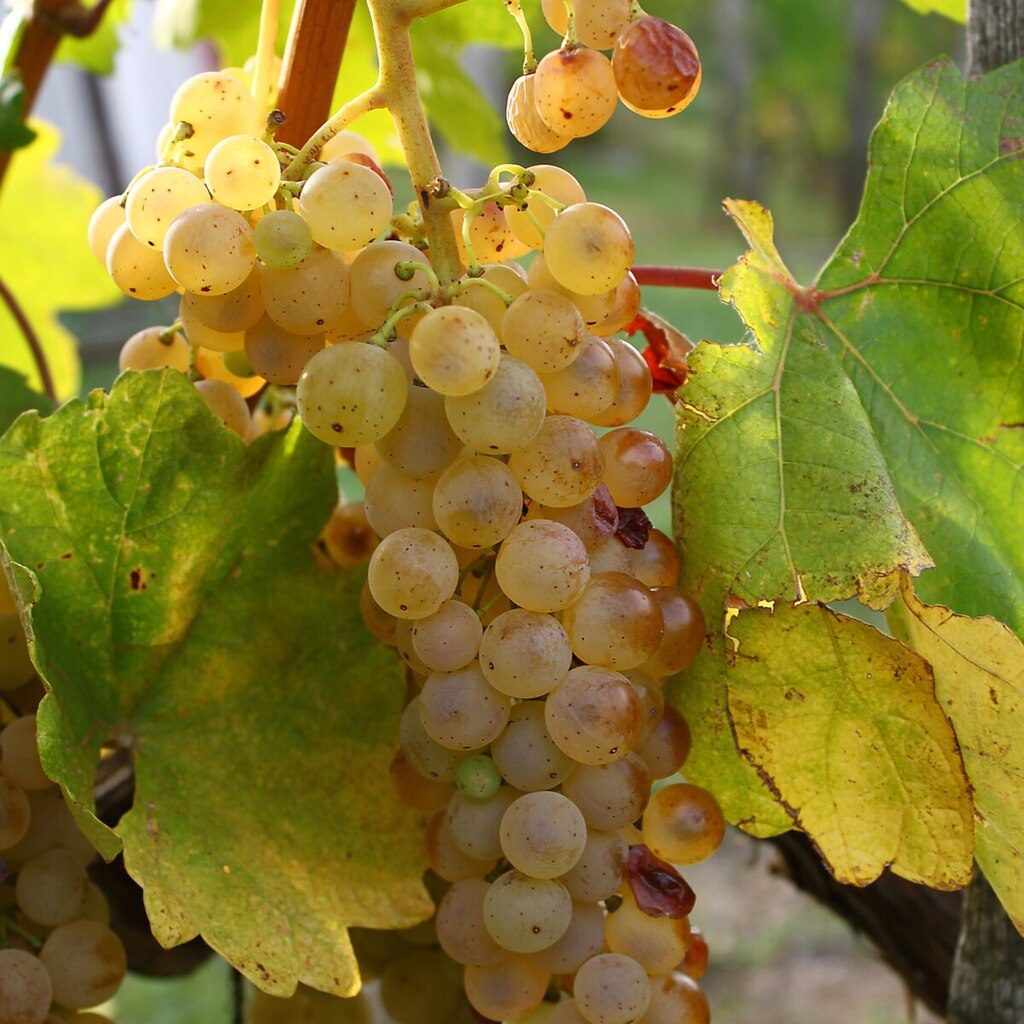
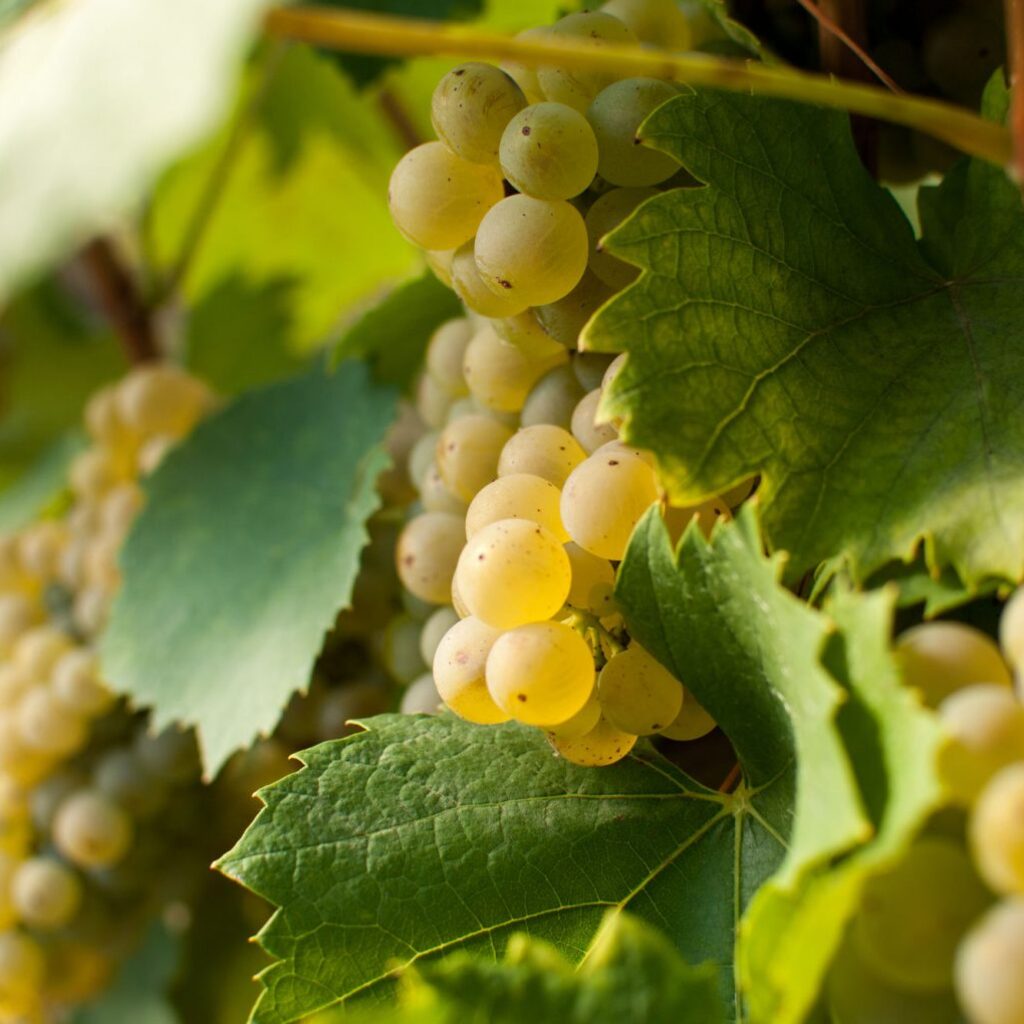
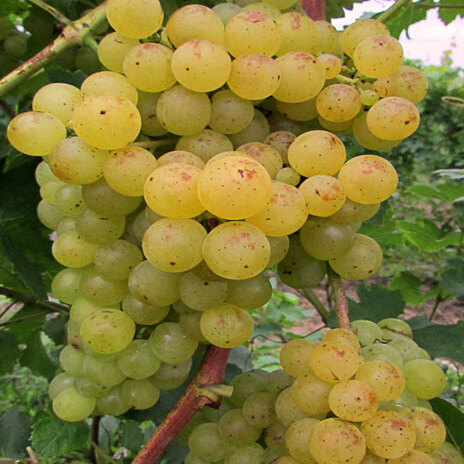
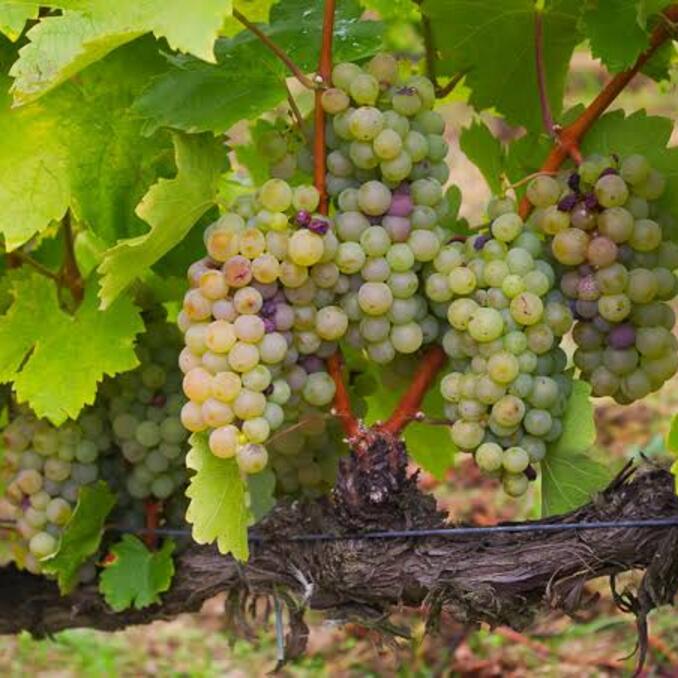
An aromatic variety that yields excellent dry and sweet wines, it was first mentioned in the mid-1700s. It is of Hungarian origin, related to Furmint and probably a descendant of a naturally occurring seedling. While its origin is relatively clear, there are many stories relating to the choice of the variety’s name. Older records called it Zöld Szőlő, Halszőlő and also Bodzavirág Szagú...
Olaszrizling:
a totaly diffrent variety...
History
A true Central European, Carpathian Basin variety, for which there are many synonyms. Although the variety is taken most seriously in Hungary, plenty of Olaszrizling is also grown in the surrounding countries. Its origins are obscure, with some sources linking it to Western Europe and suggesting that it arrived in the Carpathian Basin via France. Other sources go further west, claiming that a grape variety with similar DNA has been found in southwestern Spain. According to the German interpretive dictionary Duden, the word “welsch” means foreign, or southern, so the German name Welschriesling (in Austria) soondistinguished between it and their own Riesling, which is a totally different variety; they are not even related. There are stories of it originating from northern Italy, as well as from Croatia andRomania. So, it isperhaps most accurate if we keep to a Central European origin.
Irsai Olivér:
soft acidity and aromatic nature…
History
It is named after Pál Kocsis, who bred the variety in Kecskemét in 1930 by crossing Pozsony Fehér and Csabagyöngye. There are many legends associated with the choice of name; however, it was probably named after the son of Pál Kócsis’s friend József Irsai, Olivér, who was born in the same year as the variety.
It yields light, summery wines, while its soft acidity and aromatic nature mean that it is best characterised by its Muscat, grape blossom and grape aromatics.
Furmint:
an extremely complex variety…
History
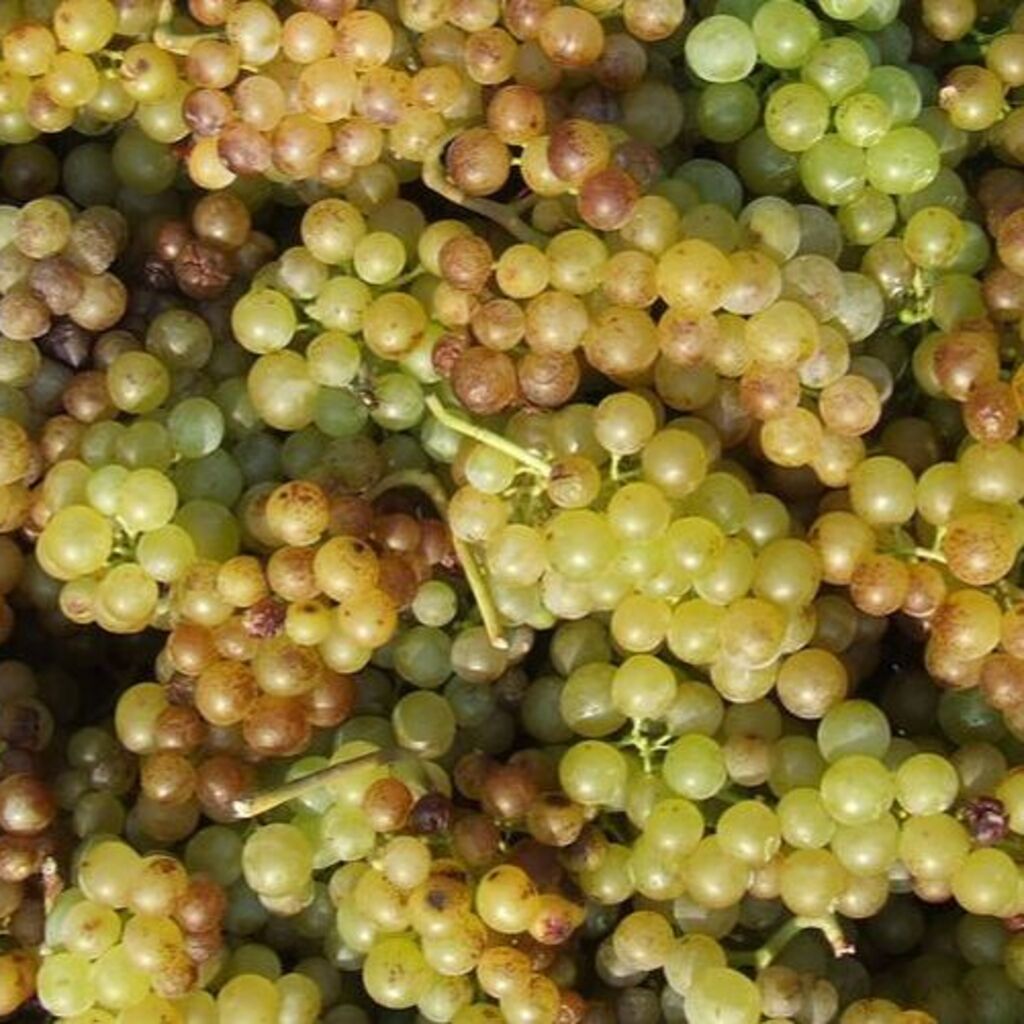
Most literature concurs that the variety’s origins lie in Hungary,in the Tokaj wine region. The earliest records of it differ; it is mentioned in the wine region in 1571 and 1623. It was an important variety, once wide spread a cross the entire country, thus also cultivated in what are today neighbouring regions ,such as Syrmia or Burgenland, albeit in smaller amounts. It is related to Gouais Blanc and there fore also to Riesling and Chardonnay. Regarding its ripening tendencies, it is considered a late type, placing its harvest to the second half of October. In its complete ripeness it appears greenish yellow and, if exposed to the sun, a distinct golden yellow hue. The most important qualities include defined acid and high alcohol contents in the balanced overcropped plantations, but also a high susceptibility to shrinking and therefore ’aszú-ification’.
Sárgamuskotály:
a high yielding variety...
History
One widespread – but never confirmed theory suggests that Sárgamuskotály
originates from Ancient Greece and made its way to Rome by the way of traders and merchants. The romans later brought it to the mediterranian areas of France, where it grew to be recognised as Muscat de Frontignan, Muscat (de) Lunel. Genetic research proves its relation to Greek varieties, alongside an obvious parent-offsping relation to the Muscat of Alexandria and several other Muscats. The “official” name of the grape in France is “Muscat Blanc à Petits Grains” (small-berried white muscat).
When exposed to the sun, its bulky clusters are made up of small, yellow, then rust-brown colored berries, which take place either loosely or quite close together. Yellow spikes on the edge of its older leaves separate it from other Tokaj varieties. Younger shoots and leaves also emit its familiar scent when rubbed together, making this grape type clearly special.
Kékfrankos:
a much-loved grape of many names...
History
A true Central European variety whose origin is not entirely clear, despite boasting a wealth of exciting stories and legends. According to the latest research, it probably originated on the territory of present-day Austria and is a natural crossing of Blaue Zimmettraube and Gouais Blanc. It is first mentioned in Austria (as Blaufränkish) and Germany (known as Lemberg in the state of Württemberg) in the mid-1800s. It was first mentioned in Hungary in 1890, its old synonym was Nagyburgundi. According to Napoleonic legend, the Sopron winegrowers had to be paid with the more valuable ‘blue francs’. This, however, might well only be a legend, as Sopron was rather planted to white varieties at that time and the variety was only registered in the country later.
Kadarka:
a real national treasure…
History
Although not a Carpathian Basin variety in terms of origin, it has now become so important in Hungary that we can say it’s our other black Hungarian variety alongside Kékfrankos. It was probably brought to the country by Serbs fleeing from the Ottomans. It is strongly associated with the settlement of Shkodra in present-day Albania; although the variety’s exact origin is unknown, it is most likely a Balkan variety. It has many synonyms, such as Törökszőlő and Fekete Budai, Skadarka in Serbia and Gamza in Bulgaria. Kadarka has become a real national treasure and many producers have stood by it, devoting time and energy to shaping the variety’s identity. Old documents mention it as the most common variety in the 19th century..